
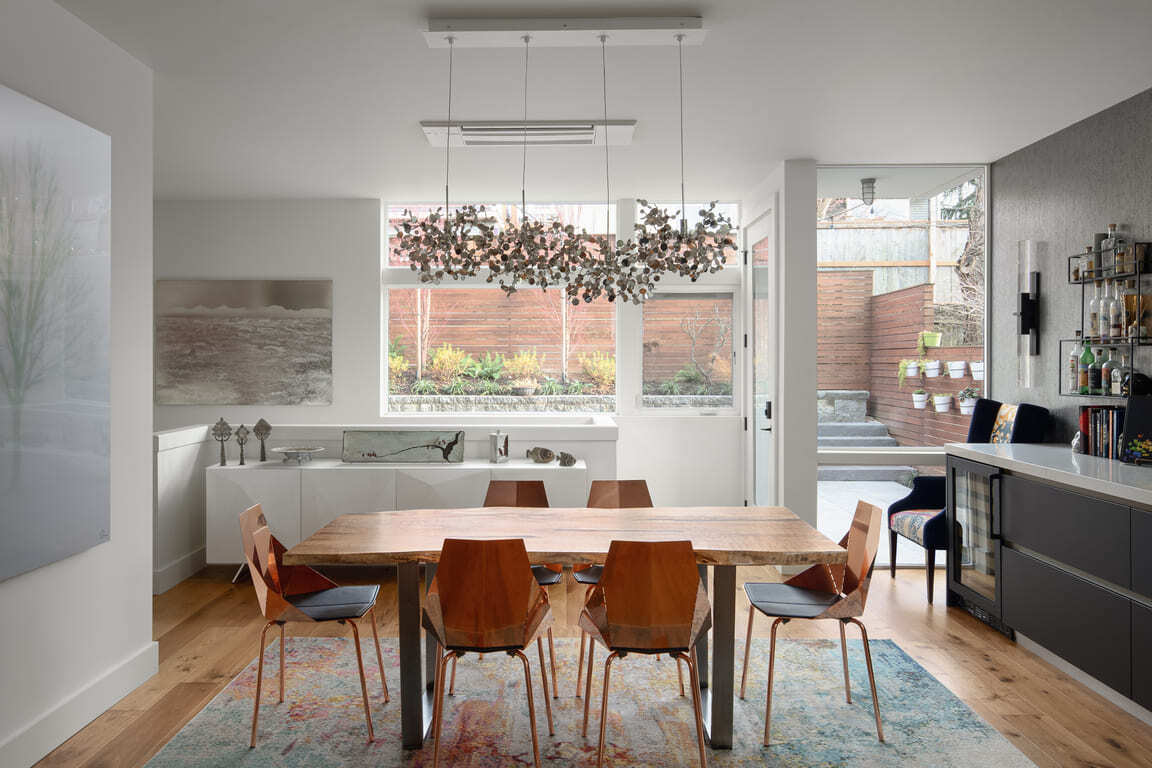
A significant remodel in Seattle is rarely just about updating finishes. It’s about rethinking how your home supports your health, your work, your family, and your connection to the outdoors. If you’re planning a major home renovation or embarking on a whole home remodel in Seattle, the team you choose will shape not only the result, but the experience getting there.
In a market that values sustainability, design intelligence, and long-term performance, the conversation around architect vs. design-build deserves careful consideration. The difference isn’t simply structural. It affects budget clarity, environmental impact, project flow, and how well your home performs for years to come.
Key considerations before you decide:
- Architect vs. Design-Build: What’s the Difference?
- The Traditional Architecture Route
- What Is Design-Build?
- Why Design-Build Makes Sense
- Sustainability, Health, and Indoor Air Quality
- What Type of Project Are You Doing?
- Budget Control and Transparency
- Collaboration vs. Handoff
- Questions to Ask
- Pathway’s Approach
- Plan a Major Remodel in Seattle
What’s the Difference Between an Architect and a Design-Build Firm?
When comparing an architect vs. design-build remodel approach, the distinction lies in how design and construction are organized and when they begin working together.
The Traditional Route
In a traditional architect-led model, you hire an architect to design your project. Once the plans are complete, they are bid out to a Seattle remodeling contractor, and construction begins under a separate agreement. Design and construction operate as distinct phases, often with different priorities and timelines.
The Design-Build Model
A Seattle design-build firm, by contrast, integrates architectural design, budgeting, engineering coordination, permitting, and construction under one contract. Designers and builders collaborate from the beginning, aligning vision with feasibility in real time.
For homeowners weighing an architect or design-build for a remodel, the core difference is integration. When builders are involved early, constructability, cost, sustainability, and sequencing inform the design before it’s finalized, not after.
The Traditional Architecture Route: Strengths and Tradeoffs
There are scenarios where an architect-led approach makes sense, particularly for highly conceptual or architecturally iconic projects.
Strengths often include:
- Deep design exploration
- A singular architectural voice
- Clear separation between creative and construction roles
However, for many Seattle home renovation projects, especially complex remodels, the separation can introduce challenges.
Because contractors are typically brought in after design is complete, pricing often becomes a late-stage reality check. If bids exceed expectations, redesign may be required. That recalibration can impact timeline, budget, and momentum.
In the design-build vs. architect discussion, timing is everything. When cost insight enters the conversation early, risk decreases. When it enters late, adjustments can feel reactive.
What Is Design-Build and How Does It Work?
A Seattle remodeling company operating under a design-build model approaches remodeling as a unified process rather than a series of handoffs.
The work begins with early planning, often through a pre-construction agreement, where scope, investment range, site conditions, sustainability goals, and long-term performance are evaluated together. Design evolves alongside budgeting, and materials are selected with full awareness of cost, availability, and environmental impact.
This alignment creates meaningful benefits, including:
- Risk reduction through early feasibility analysis
- Cost certainty developed during design, not after
- Decision clarity before construction begins
- A streamlined remodeling process in Seattle that homeowners can follow confidently
For substantial home remodeling projects, this structure creates steadiness. And in remodeling, steadiness matters.
Why Design-Build Makes Sense for Seattle Remodels
Seattle homes present unique considerations. Many are Craftsman or mid-century structures with aging systems, moisture sensitivities, and structural surprises hidden behind walls. Add evolving energy codes and progressive environmental standards, and remodeling becomes both technical and strategic.
For a Seattle custom remodel, having construction expertise present during design helps anticipate:
- Structural reinforcement needs
- Envelope improvements for long-term durability
- Energy efficiency upgrades
- Daylighting strategies aligned with Seattle’s climate
For families remodeling while living in their home, early coordination also shapes phasing, site protection, and workflow by minimizing disruption without compromising quality.
Whether you’re planning an addition, reworking your primary suite, or undertaking a full whole home remodel in Seattle, integrated collaboration reduces friction and supports better outcomes.
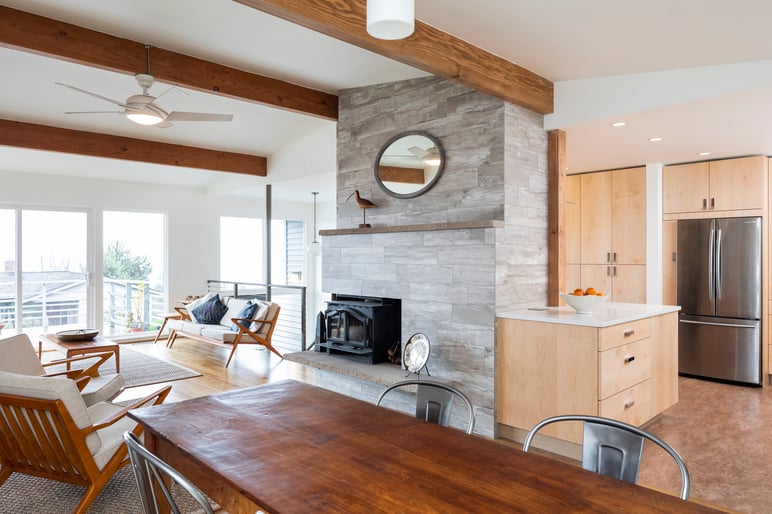
Sustainability, Health, and Indoor Air Quality: Where the Right Team Matters
Seattle homeowners consistently prioritize environmental responsibility. But sustainability in remodeling is not achieved through product selection alone; it’s executed through process.
When evaluating architect vs. design-build, consider how deeply each team integrates health and environmental standards into construction.
A truly environmentally conscious contractor will address sustainability at multiple levels:
- Material Vetting: Selecting low-VOC finishes, responsibly sourced wood, and durable products aligned with a low-tox remodel philosophy.
- Air Quality Protection During Construction: Implementing containment systems, negative air machines, and proactive dust control during renovation to protect indoor air quality.
- Moisture and Ventilation Strategy: Designing assemblies that improve long-term indoor air performance and reduce mold risk is key to healthy home remodeling.
- Waste and Resource Management: Diverting debris responsibly and approaching eco-friendly remodeling with measurable action, not just intention.
Pathway was founded on the belief that every project should leave the home healthier than before. That philosophy shapes not only material choices, but also jobsite cleanliness and clean construction practices from demolition to final walkthrough.
For homeowners pursuing sustainable home renovation or projects aligned with green building standards, execution is just as important as design intent.
What Type of Project Are You Doing?
Not every project requires the same structure.
An architect-led model may be appropriate for highly conceptual new construction where budget flexibility is secondary to architectural expression.
Choosing a design-build approach is often particularly well-suited for:
- A structural major remodel project
- A high-investment luxury home remodel in Seattle
- Additions requiring engineering coordination
- A full home renovation
- A comprehensive custom remodel with sustainability priorities
For complex remodels, integration reduces duplication of effort and preserves clarity from first sketch to final inspection.
Budget Control and Transparency
In the architect vs. design-build remodel conversation, budget transparency is often decisive.
Traditional sequencing introduces cost after design completion. If pricing exceeds the intended investment range, redesign follows.
In contrast, a Seattle design-build firm integrates cost modeling during design development. Labor conditions, material availability, permitting requirements, and structural realities are considered in real time.
For a remodeling contractor in Seattle, WA, early involvement allows construction knowledge to guide decisions before they become expensive revisions. That alignment supports the financial clarity homeowners expect when investing in a high-level home remodel.
Collaboration vs. Handoff
Beyond structure and budget, the difference between architect vs. design-build is about experience.
Architect-led projects move sequentially. Design is completed, then handed off to a builder for execution.
Design-build is collaborative from the beginning. Designers, estimators, and project managers work in parallel, creating shared accountability and continuity.
For homeowners balancing demanding careers and family life, a unified Seattle remodeling company can offer a smoother path through the complexity of a large-scale Seattle home renovation.
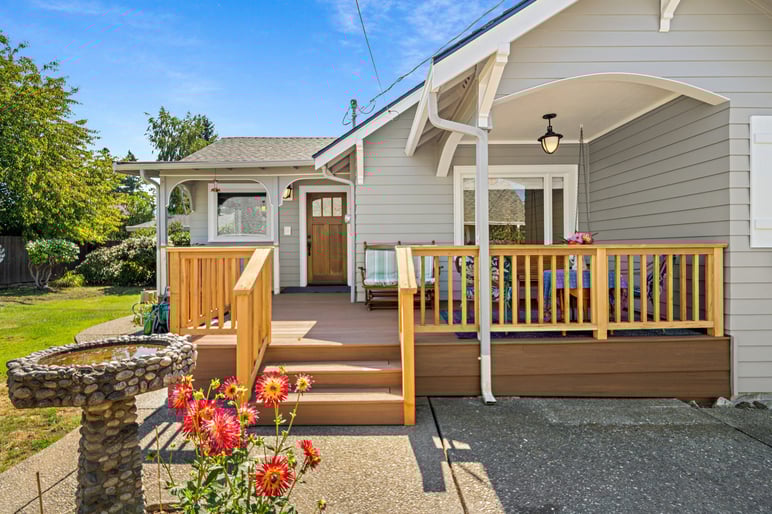
Questions to Ask Before You Decide
If you are evaluating design-build vs. architect Seattle, consider asking:
- When does pricing enter the design conversation?
- How do you prevent budget overrun after drawings are complete?
- What is your approach to green building in Seattle?
- How do you protect indoor air quality during renovation?
- How will you support us if we are remodeling while living in our home?
- What does your full remodeling process look like?
Clarity in these areas often reveals which structure aligns best with your priorities.
Why Pathway Leans Into the Design-Build Model
Since 2008, Pathway Design + Construction has operated as a forward-thinking, health-centered Seattle remodeling company. Choosing to operate as a design-build firm was intentional. Integrated collaboration allows for early planning that reduces risk, aligns budget before construction begins, and embeds sustainability into every phase of the work—not as an upgrade, but as a baseline standard.
Pathway’s model prioritizes design-first engagement, measurable clarity within the remodeling process, and a commitment to healthy home remodeling. For clients undertaking a high-level remodel in Seattle, the goal is not just an exceptional finished product; it’s a steady, transparent, and health-conscious experience from first conversation to final walkthrough.
Planning a Major Remodel in Seattle?
If you’re evaluating architect vs. design-build for your upcoming project, the most important step is starting with a team that values early alignment, environmental responsibility, and clear communication.
Pathway Design + Construction partners with Seattle homeowners who want more than a beautiful result; they want a process rooted in clarity, stewardship, and long-term performance. If you’re ready to begin your Seattle home renovation, we invite you to start the conversation.